
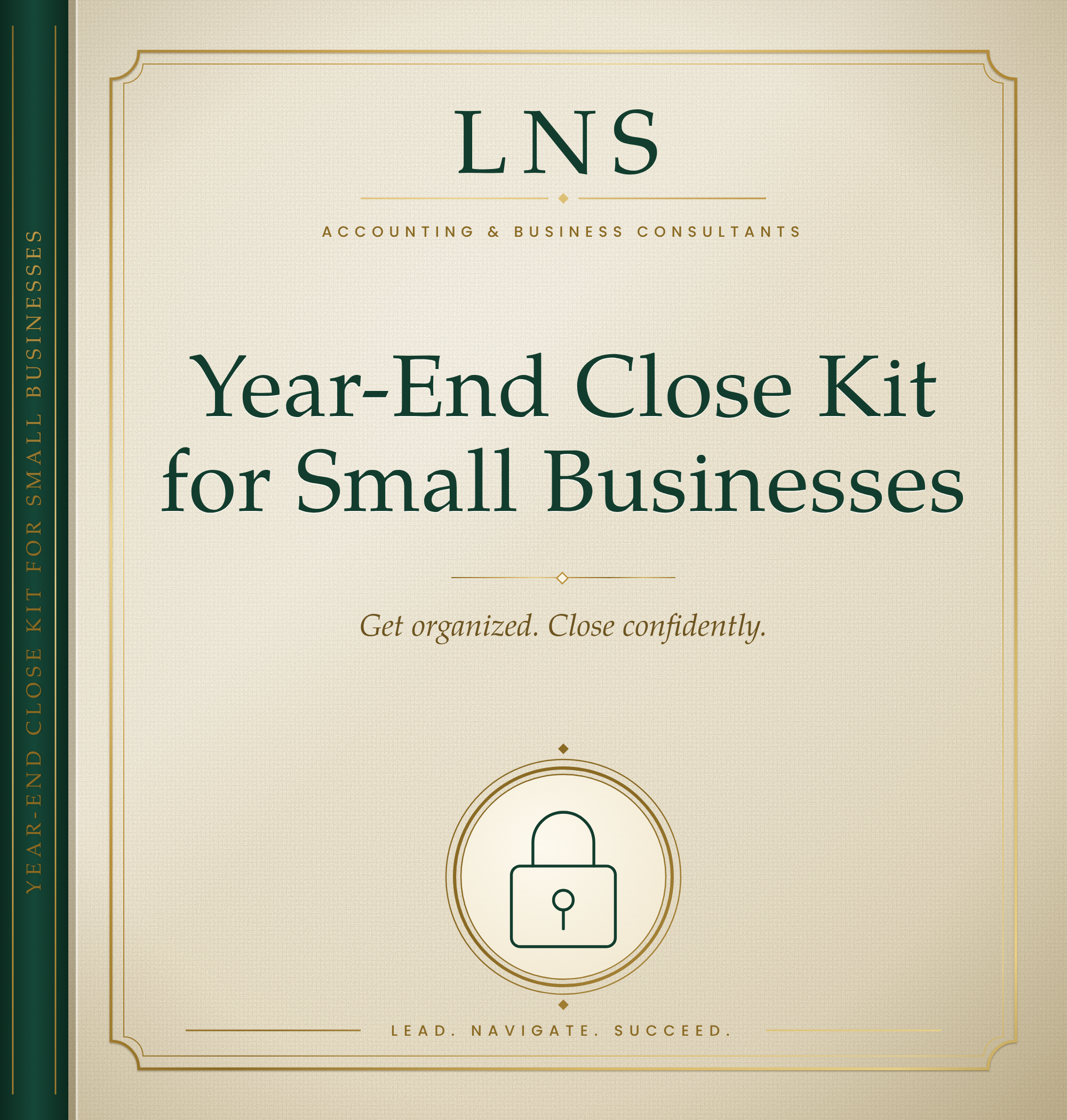
A year-end close checklist for clean books and an easy tax season
This year-end close checklist walks you through closing your books, step by step, from December through filing. As a result, your preparer gets clean numbers, and you avoid last-minute surprises.
Thank you for reading this post, don’t forget to subscribe!Who it’s for
It’s built for small business owners who do their own books, in-house bookkeepers, and outside bookkeepers who close the year for clients.
What the year-end close checklist helps you do
- Follow a clear timeline for the close
- Fix the five areas that cause the most trouble
- Review vendors for 1099 filing and collect W-9s
- Record adjusting entries before you send the books out
What’s included
- Year-End Close Guide (PDF)
- Year-End Close Workbook with Close Checklist, 1099 Vendor Review, and Adjusting Entries tabs (Excel)
How it works
First, start the timeline in December. Next, work through the close checklist area by area. Then, complete the 1099 vendor review. Finally, post your adjusting entries and send the package to your preparer.
Why a year-end close matters
A clean close means an accurate return and a better starting point for next year. For federal recordkeeping basics, see IRS Publication 583. Not sure where you stand? Start with our free tax-ready books checklist.
Year-end close checklist FAQ
When should I start the close? Start in early December. That leaves time to collect W-9s, review vendors for 1099s, and fix problems before the January filing deadlines.
Is this only for accounting software users? No. The checklist works whether you use software or spreadsheets, because the steps focus on what needs to be reviewed.
What do I send my preparer at the end? Send your year-end reports, the completed close checklist, the 1099 vendor review, and your adjusting entries. The guide lists everything in one place.
Want help closing the year? Work with us at LNS Accounting & Business Consultants.
Format: PDF and Excel. Instant download. General information only. Not tax advice.