
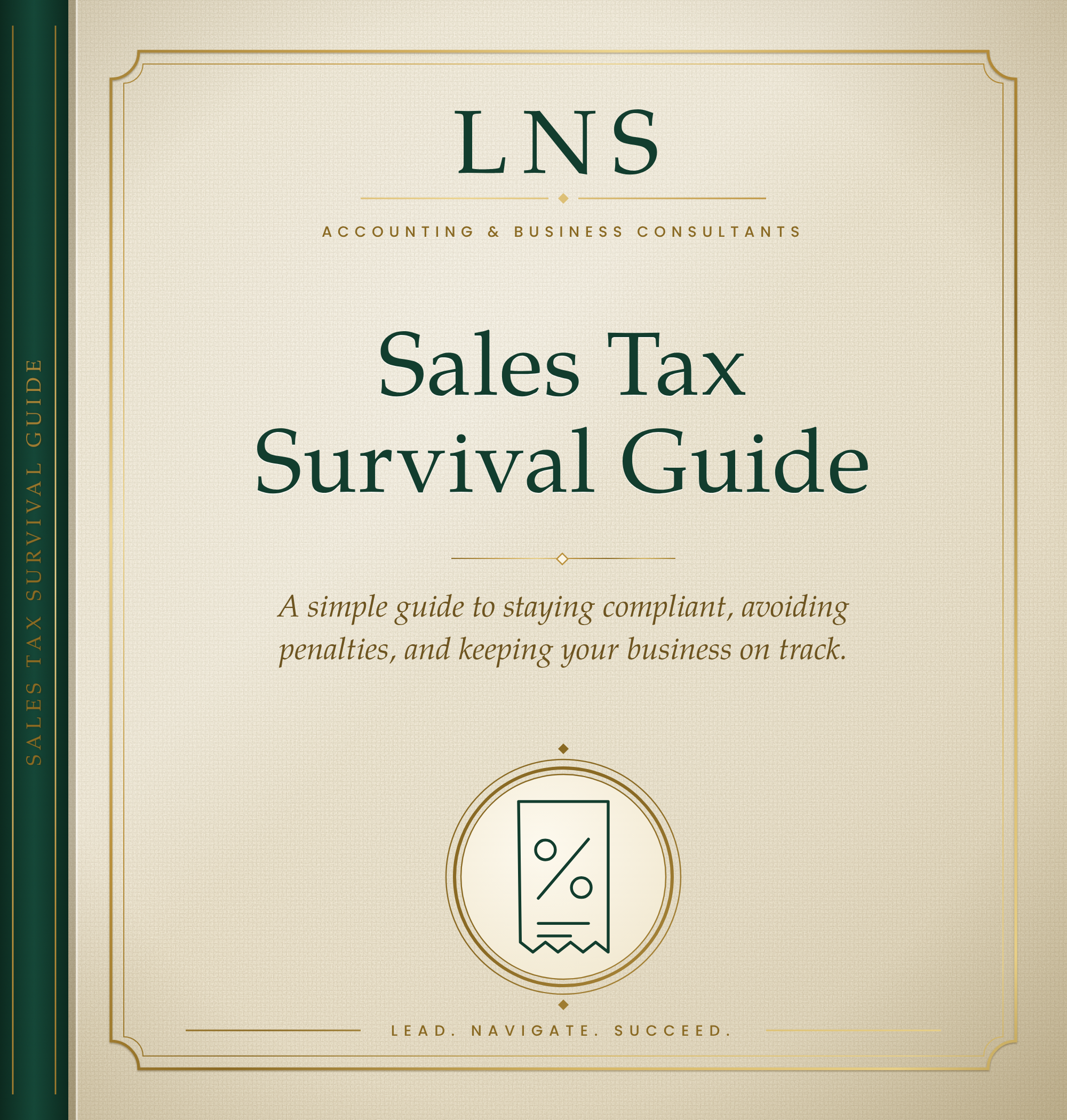
A sales tax guide for small businesses that sell across state lines
This sales tax guide explains when you have to collect, what to charge, and how to stay compliant. Sales tax is different from income tax in one important way: it isn’t your money. You collect it for the state. So if you don’t collect when you should, you can owe it from your own pocket, plus penalties.
Thank you for reading this post, don’t forget to subscribe!Who it’s for
Retailers, e-commerce sellers, and service businesses unsure whether sales tax applies to them, especially those selling into more than one state.
What the sales tax guide helps you do
- Understand physical and economic nexus, and where you have a filing obligation.
- Know how marketplace sales on Amazon, Etsy, and eBay are treated.
- Set up collection and filing the right way.
- Compare Missouri and Kansas rules side by side.
What’s included
- Sales Tax Survival Guide (PDF), with a compliance checklist and a Missouri and Kansas comparison.
- Sales Tax Nexus Tracker (Excel): track sales by state and get flagged as you approach each threshold.
How it works
First, read the three questions every seller must answer: is it taxable, where must I collect, and at what rate? Next, list each state you sell into in the tracker. Then update sales each quarter. As a result, you’ll know where to register before a state comes asking.
Why sales tax matters
Since 2018, states can require out-of-state sellers to collect once sales pass a threshold. Many small sellers don’t realize they’ve crossed one. The SBA summarizes your obligations in its guide to paying business taxes. Selling products? Also see our Inventory & COGS Tracker.
Want LNS to handle registrations and filings? Work with us.
Format: PDF and Excel. Instant download. Sales tax rules vary by state and change often; confirm with each state before acting.